EMPORIO
Musa paradisiaca (2026)
Footage by J. and S.
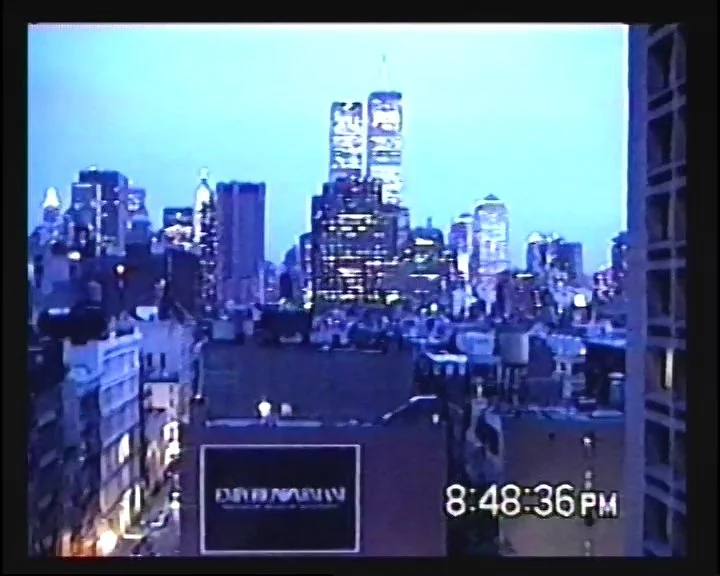
THE ENVELOPE (THE WINDOW AND THE EMPIRE)
THE IMAGE (VHS)
The camera is a body fumbling through space. J. walks through her new home; the image is unstable, scarred by the magnetic grain of a dying tape. We see an inventory of light: the texture of the walls, the geometry of the corners, and finally the window. The landscape is, at this moment, merely the backdrop for a life beginning — a promise of the future framed by glass.
THE SOUND
The ambient sound of an empty house. J.’s voice, close, almost tactile, introduces the space with the warmth of someone building a nest. There is an acoustic intimacy that precedes the shock.
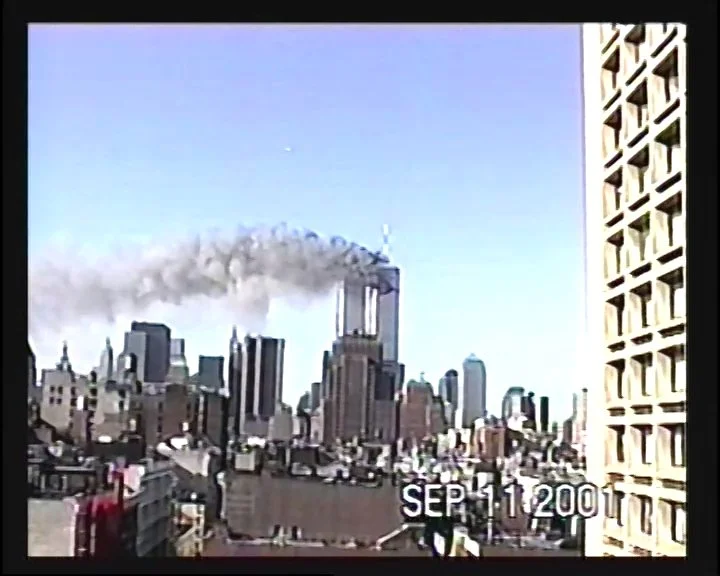
THE CUT (THE FRACTURE)
Time jumps. The domestic routine is invaded by an invisible interference.
First Impact: We don’t see the fire; we see the smoke. The sound of the television or radio in the backdrop. Broken dialogues. The doubt: Accident or error?
Second Impact: The atmosphere of the house shifts. Incredulity sets in. The space that was once "home" becomes a resonance chamber for the outside world.
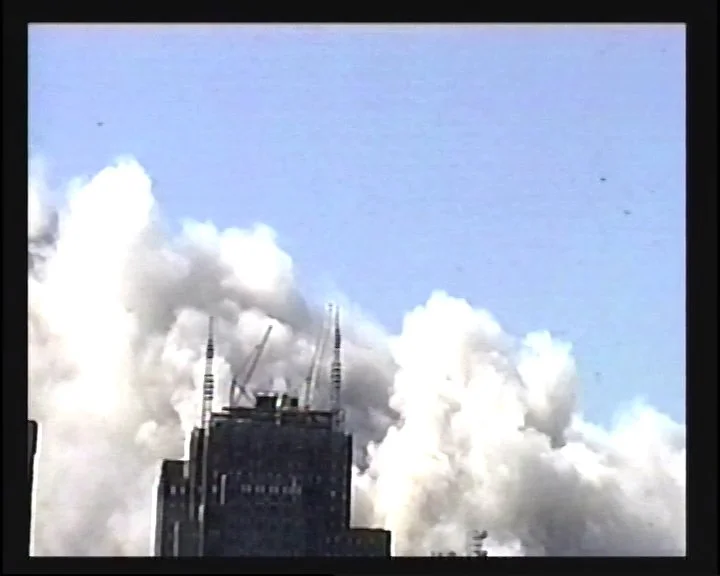
THE CLIMAX (THE INVISIBLE FALL)
The towers fall. On screen, a void. We never see the collapse. We only see the event reflected in the reactions of the one recording and the one observing. The crying is not cinematic; it is a raw sound of suspension.
The image is left only with the fragility of a shot that no longer knows where to look.
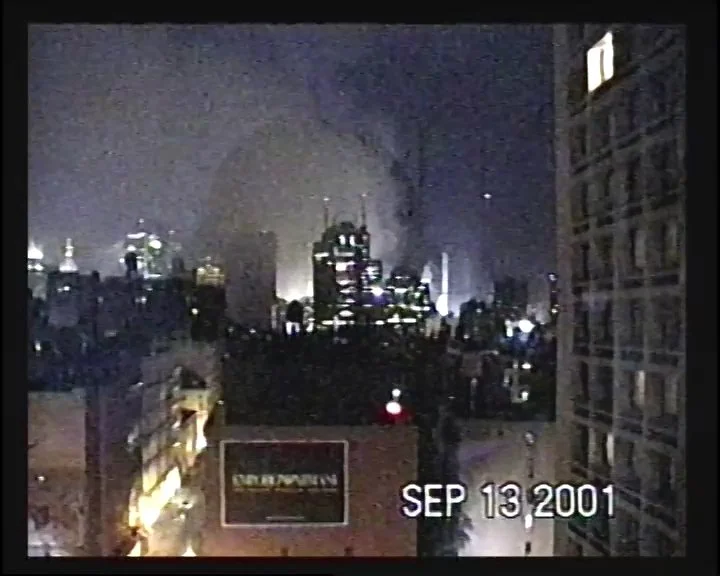
THE RITUAL OF THE ABSENT SKYLINE
THE IMAGE (THE CHRONICLE OF SMOKE)
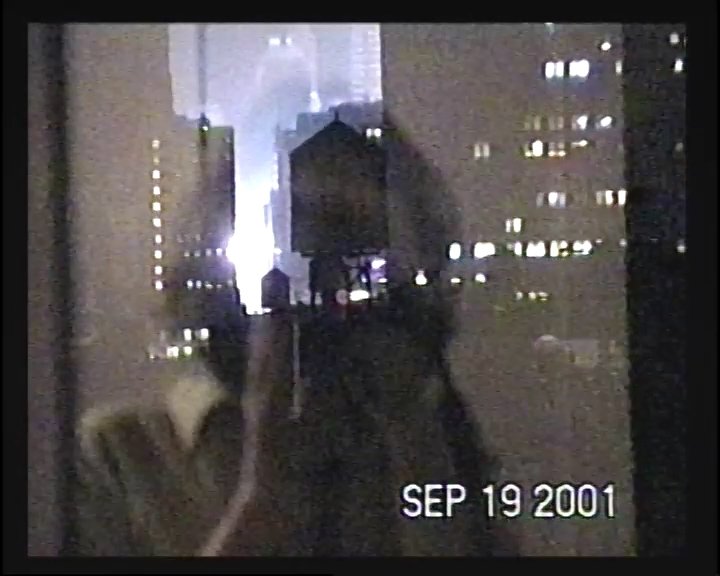
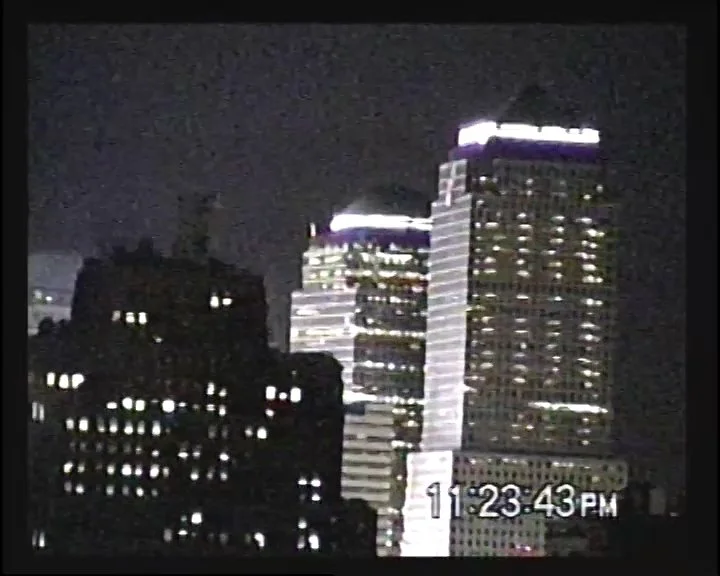
The window becomes a fixed lens on an altered world. We witness a succession of nights. Time is no longer linear; it is measured by the dissipation of smoke over the skyline. Each night, the camera returns to the glass, documenting the "gap" in the sky—a negative space that has become the new monument.
THE SONIC CATHARSIS (SHOSTAKOVICH)
A deliberate shift. J. plays a Shostakovich String Quartet No. 15. The music isn’t just a soundtrack; it is a vehicle. She films the night, using the dramatic weight of the strings to match the magnitude of the loss.

THE INTERIOR (ORCHIDS AND EMPTINESS)
The camera turns inward. The darkness of the house. The orchids on the windowsill—living, fragile organisms contrasting with the cold, missing geometry of the city outside. The domestic space and the urban void begin to merge.
THE MEMORIAL (IMAGE VS. WINDOW)
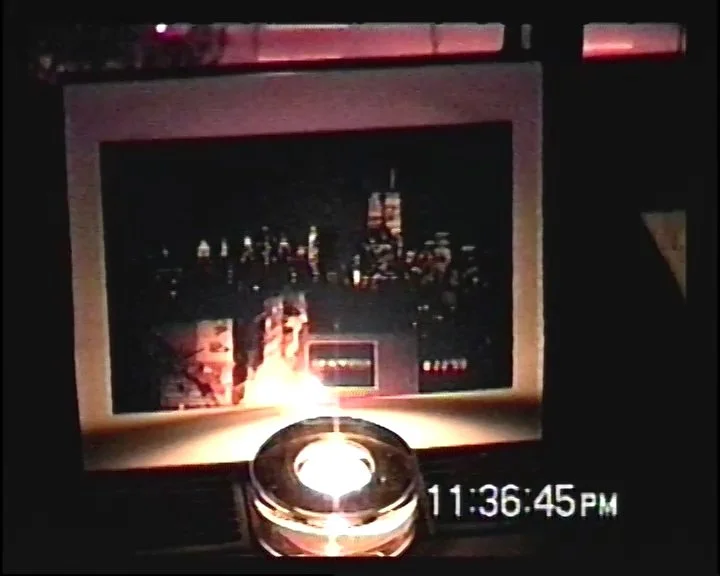
The most poignant gesture: J. constructs a personal shrine. She holds an old photograph of the Twin Towers against the current window. The "before" (the paper) and the "now" (the glass) collide. The image documents the birth of a phantom.
THE RETURN (THE MARKED STREETS)
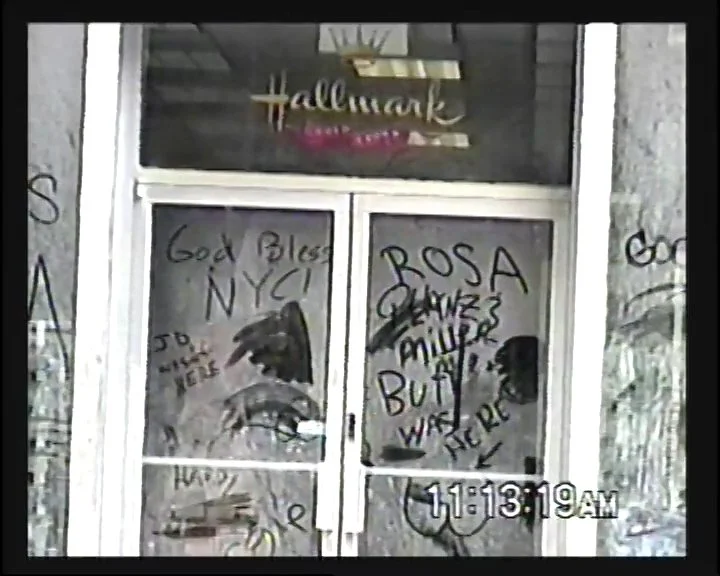
Life resumes, but the ground has changed. They walk to Ground Zero. The camera captures the mundane details of a traumatized city: the empty streets, the faces of strangers, the signs and scars left on the pavement. The "Empire" is now a map of traces.
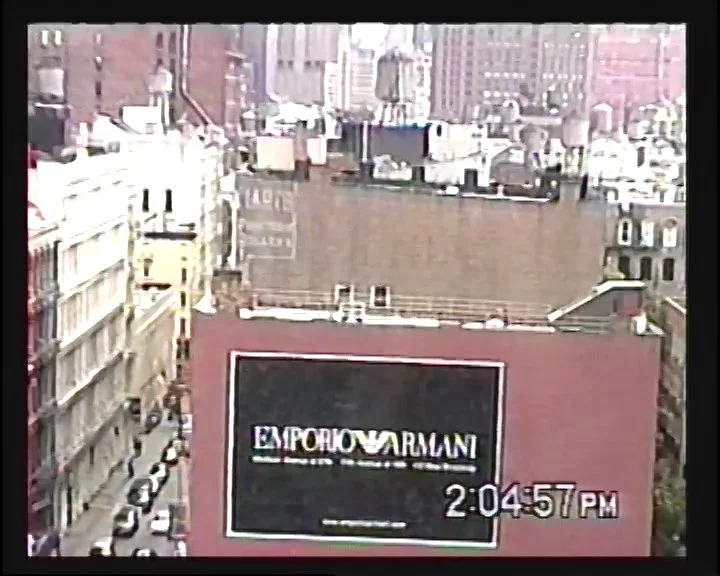
THE STATIC EMPIRE (THE ARMANI BILLBOARD)
THE VISUAL ANCHOR
Throughout the 90 minutes, every time the camera returns to the window to document the shifting smoke or the changing light of the skyline, one element remains eerily undisturbed: a massive Emporio Armani billboard. It gazes back at J.’s window as the only "monument" that doesn't flicker, the “background noise” of a psychological portrait. The title of the film, EMPORIO, is birthed here: in the friction between the fragility of the human body and the iron-clad permanence of the brand.